Hardwired vs. Cordless Wall-Mounted Makeup Mirrors: Which One Actually Wins for a Permanent Vanity Setup?

If you're finally putting in a real makeup mirror instead of dragging a tabletop one out every morning, you'll hit this question fast: hardwired or cordless? Both types show up in nearly every bathroom renovation shortlist, and both are recommended for different reasons. The honest answer is that "permanent" doesn't automatically mean "hardwired," and cordless doesn't automatically mean "temporary." It depends on what you're solving for.
We've sold both types long enough to know where each one genuinely shines, and where the marketing overstates the case.
Here's the breakdown.
What "Hardwired" Actually Means
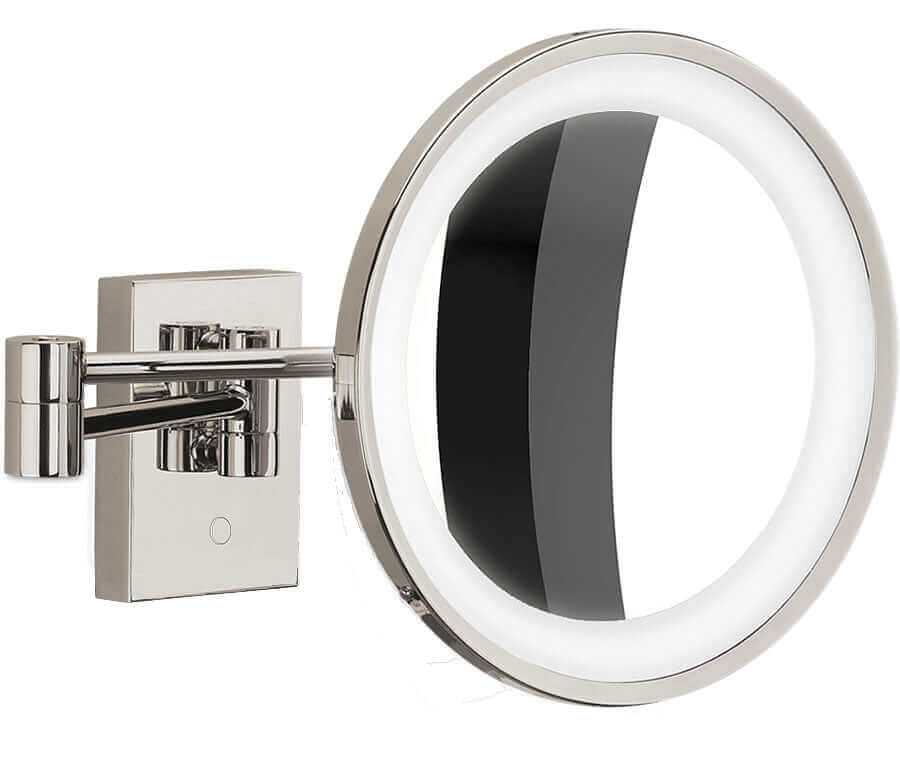
A hardwired mirror connects directly to your home's electrical wiring, usually through a junction box behind the wall. There's no cord, no plug, and no visible power source anywhere on the mirror. The on/off and brightness controls sit on the mirror itself, so you don't need a separate wall switch.
This is the setup you see in high-end hotel bathrooms, and it's the reason hardwired mirrors are consistently the best-selling wall-mount category. Nothing about them looks temporary. Once it's on the wall, it reads as part of the room, not an accessory.
The catch is installation. A hardwired mirror should be installed by a licensed electrician, which means opening the wall (or working with existing wiring), inspection in some municipalities, and a bill that sometimes goes beyond the price of the mirror itself. It's a one-time cost, but it's real, and it's not something most homeowners do themselves.
What "Cordless" Actually Means
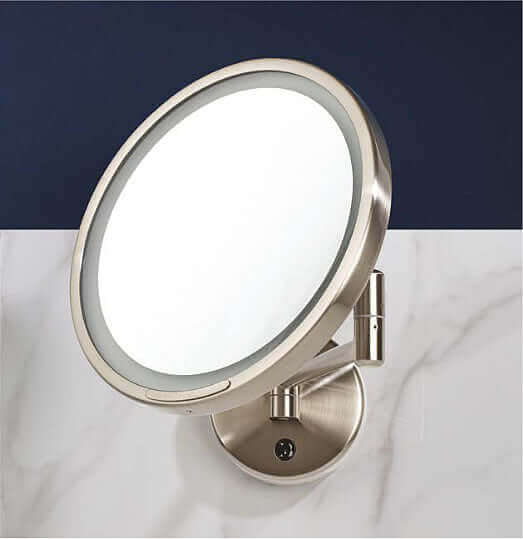
Cordless wall-mounted mirrors run on a rechargeable battery or, less commonly, replaceable batteries. Mounting is mechanical, only screws and anchors, no electrician, and is often finished in under 30 minutes. You periodically recharge it, usually every several weeks, depending on how often the light is on.
Battery technology in this category has improved enough that "cordless" no longer means "underpowered." Several current models hold a charge for a month or more of normal daily use, and mid-range options now offer the same LED quality, color temperature switching, and magnification range that used to be hardwired-exclusive. The trade-off is maintenance. You will eventually need to plug in a cable to recharge it.
The Comparison That Actually Matters
Installation cost and effort. Hardwired wins on nothing here except final appearance. Cordless wins decisively on cost, speed, and the ability to install it yourself without touching electrical wiring.
Long-term reliability. Hardwired mirrors have no battery to degrade, so light output and mirror function stay consistent for years without any owner intervention. Cordless mirrors are excellent, but batteries do age, expect a gradual reduction in charge duration after a few years, similar to a phone battery.
Flexibility. If you rent, plan to remodel again soon, or simply aren't sure exactly where the mirror should live, cordless is the safer bet. It mounts without modifying the wall's electrical system and can be relocated without an electrician's involvement.
Aesthetics. This is the one place hardwired has a genuine, permanent edge. No cord, no visible charging port, no battery compartment. For a truly built-in, spa-like vanity, hardwired still looks the most finished.
Placement freedom. Hardwired mirrors are locked to wherever the junction box is, which usually means deciding on placement before or during a renovation. Cordless mirrors can go anywhere there's wall space to anchor a bracket, including spots far from any outlet.
So Which One Actually Wins?
If you're mid-renovation, working with an electrician already, and want the cleanest possible finish with zero ongoing maintenance, hardwired is worth the extra installation cost. It's built for a bathroom you don't plan to touch again for a decade.
If you want a genuinely permanent-looking mirror without opening a wall, or you want the freedom to reposition it later, a quality cordless LED mirror is the more practical choice for most households, and the newest models close the performance gap almost entirely.
"Permanent" is really about how the mirror is mounted to the wall, not how it's powered. A well-installed cordless mirror is just as fixed to your wall as a hardwired one. The power source is a separate decision about convenience, cost, and how much you want an electrician involved in your bathroom project.
Quick Decision Guide
● Renovating from scratch with an electrician on site? Go hardwired.
● Updating an existing bathroom without construction? Go cordless.
● Renting or planning to move within a few years? Go cordless.
● Want the absolute cleanest, wire-free look and don't mind the install cost? Go hardwired.
● Unsure where exactly to place it? Go cordless, then reassess later.
Frequently Asked Questions
Do hardwired mirrors need a wall switch?
No. Nearly all hardwired wall mirrors have controls built into the mirror housing itself, so a separate switch isn't required.
How long does a cordless mirror battery actually last?
It varies by model and usage, but most current rechargeable wall mirrors run for two weeks between charges under normal daily use.
Whichever direction you go, prioritize LED lighting with adjustable color temperature and genuine, distortion-free magnification. Those two factors affect your daily experience far more than how the mirror gets its power.