The Skincare-Mirror Connection: Why Dermatologists Recommend Magnified, True-Light Mirrors for At-Home Skin Checks
Most of us look in the mirror every morning without really looking. We check for stray eyebrow hairs or a bit of toothpaste on our chin, then move on. But your bathroom mirror can do far more than help you get ready. Used the right way, it can become one of the simplest tools for catching early skin changes, the kind dermatologists say matter most.
That is why more skin specialists are pointing patients toward a specific kind of mirror: one that magnifies clearly and shows skin in true, daylight-accurate light. It is a small change in your routine that can make a real difference in how early you spot something worth a second look.
Why Ordinary Mirrors Fall Short for Skin Checks
Standard bathroom mirrors are built for a general glance, not close inspection. Two problems come up again and again.
The first is lighting. Most bathrooms use warm yellow bulbs or harsh overhead fixtures, both of which distort how skin actually looks. A yellow-toned bulb can mask redness or hide the early blotchiness of a rash. A cool, overly blue light can make healthy skin look dull or uneven. Neither gives you an honest picture.
The second is magnification, or the lack of it. Many changes dermatologists ask patients to watch for, like a new pigment mark near a mole, a shift in a spot's border, or a patch of fine, scaly skin, are subtle. At arm's length, in a standard mirror, they are easy to miss entirely.
Put those two issues together and it is clear why a simple mirror upgrade is now part of many dermatology recommendations.
What "True Light" Actually Means
True light, sometimes marketed as daylight-balanced or natural light, refers to a light source calibrated close to natural midday sunlight, generally in the 5000K to 6500K range on the color temperature scale. This range renders skin tone, redness, and pigmentation the way they would appear outdoors, without the yellow cast of incandescent bulbs or the blue-grey tint of cheap LEDs.
Dermatology offices already use daylight-balanced lighting for exactly this reason: color accuracy makes it easier to judge whether a mark on the skin looks inflamed, pigmented, or simply shadowed. Bringing that same standard into your bathroom means you are checking your skin under conditions closer to what a professional would use, rather than under lighting designed to flatter.
Why Magnification Matters for Early Detection
The American Academy of Dermatology recommends monthly self-examinations using the ABCDE method for moles: checking for Asymmetry, Border irregularity, Color variation, Diameter changes, and Evolving shape over time. Every one of those checks depends on being able to see fine detail clearly.
A mirror with 5x to 10x magnification lets you examine a mole's edge or a patch of skin the way you would with a magnifying glass, but hands-free and at a comfortable distance. This matters especially for spots in hard-to-see areas: the back of the neck, behind the ears, the scalp line, or the upper back, places people rarely examine closely because standard mirrors do not offer a clear enough view.
Combining strong magnification with true-light illumination means you are far less likely to dismiss a genuine change as a trick of the lighting, and far less likely to miss something small because the mirror simply could not show it.
Building a Simple At-Home Skin Check Routine
Dermatologists generally suggest a monthly self-check, done in a well-lit space with a full view of the body. A magnified, true-light mirror is most useful for the second stage of this routine, once you have done a general once-over and want to look closer at a specific spot.
A practical routine looks like this: start with an overall scan in good lighting to get a general sense of your skin. Then use your magnifying mirror to look closely at any moles, marks, or areas you want to track over time. Note the size, shape, and color of anything you are watching, and check back on it at the same time each month. If anything has changed noticeably, or if a spot itches, bleeds, or will not heal, that is the point to book a dermatologist visit rather than keep monitoring at home.
A simple written note or dated photo helps too. Consistent lighting is what makes those comparisons reliable, which is another reason a stable, true-light mirror is worth the investment.
Choosing the Right Mirror for the Job
Not every LED mirror on the market is built with skin checks in mind. A few features are worth prioritizing:
● Ability to switch from magnified to non-magnified, ideally with at least one 5x or higher side for close inspection
● A true or daylight-balanced light setting, not just "bright white"
● Even, shadow-free lighting around the entire mirror surface, not plain overhead lighting.
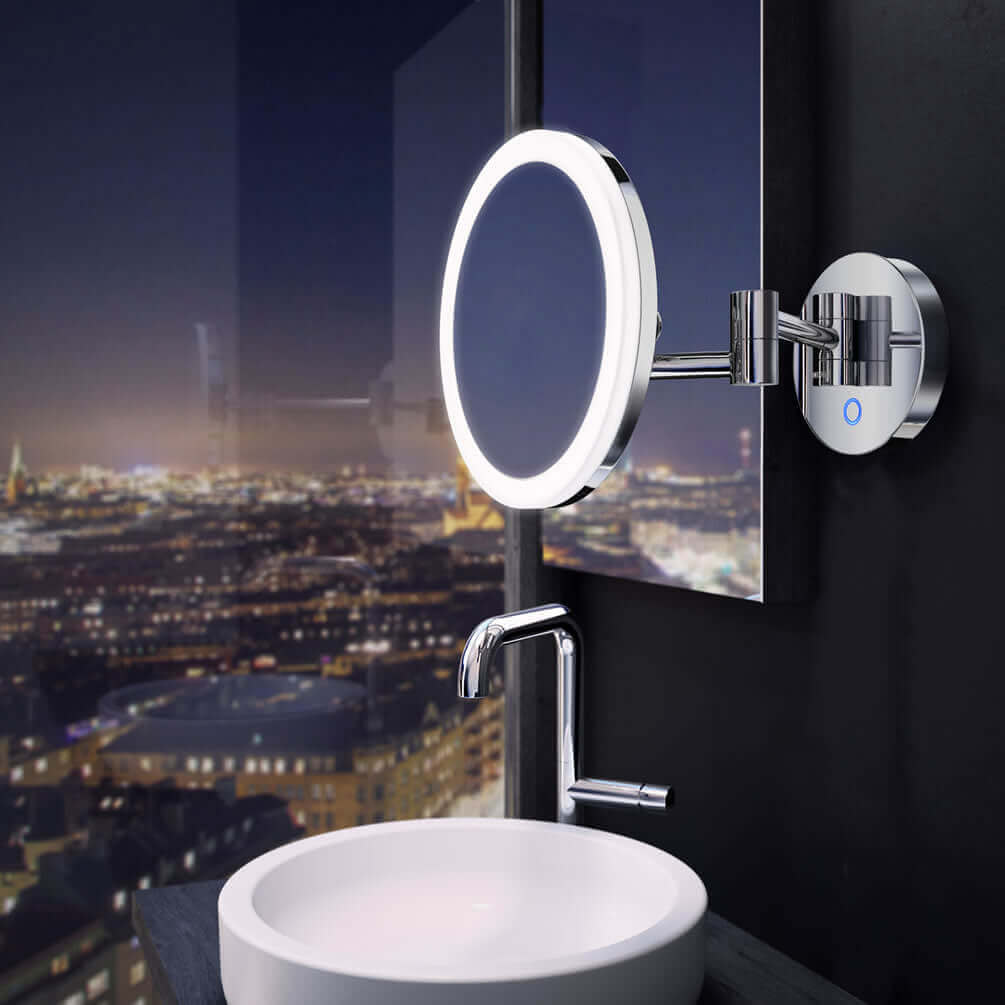
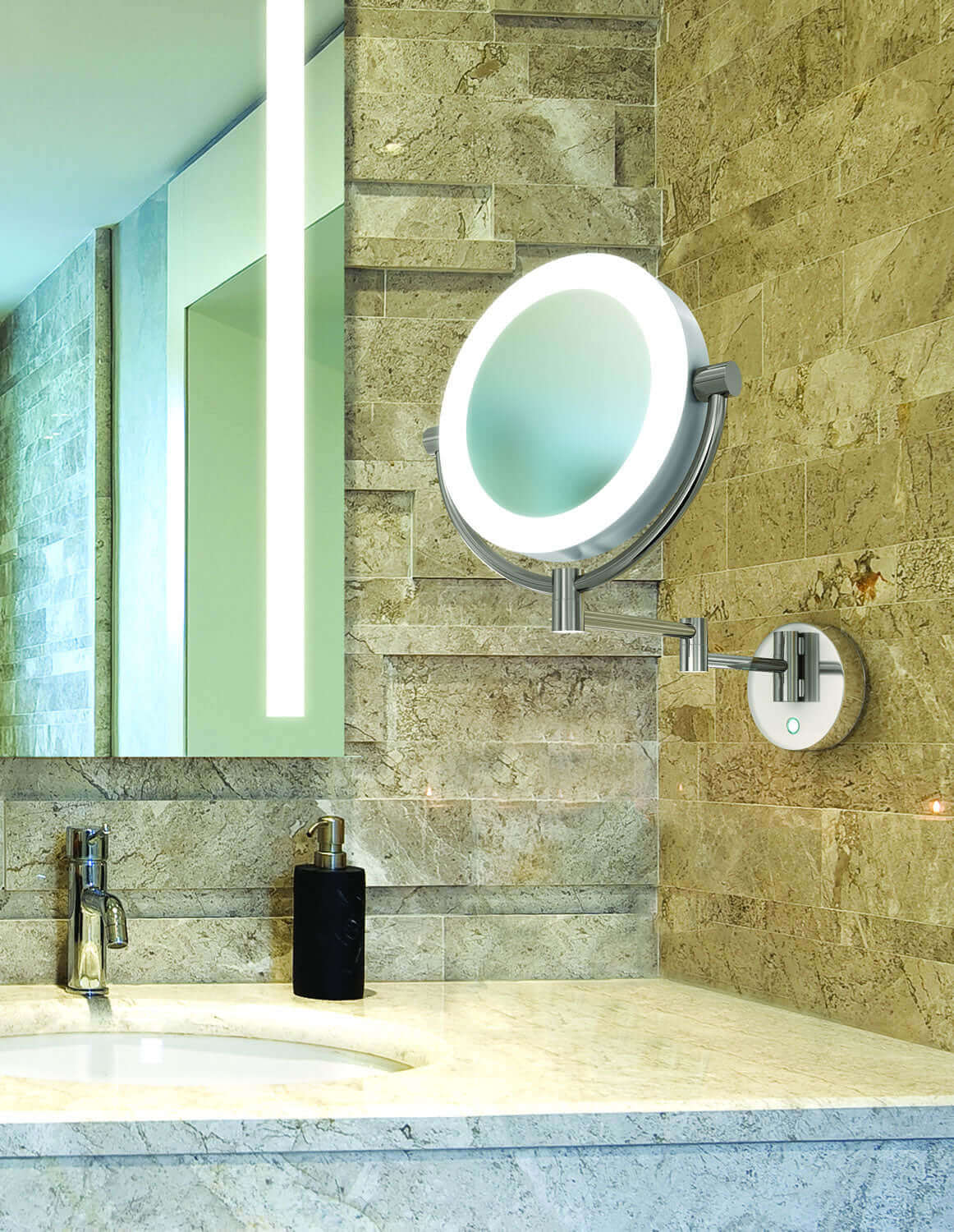
● A stable, hands-free stand or wall mount so you can look closely without holding a handheld mirror at an awkward angle
A well-designed magnifying mirror earns its place the same way a good skincare product does: through daily, honest use. It will not replace a dermatologist and is not a diagnostic tool, but it makes it easier to notice the small things worth mentioning at your next appointment.
The Bottom Line
Skin checks work best when you can clearly see what you are looking at. A magnified, true-light mirror strips away the guesswork that comes with shoadow-prone lighting and distant glances, giving you a clearer, more consistent view of your own skin from one month to the next. It is a small addition to your bathroom counter with an outsized role in catching changes early, which remains one of the simplest and most effective things you can do for your skin's long-term health.